UX Research | UX/UI Design | Mobile Design | Prototyping | Gamification | Accessibility | Figma | Health & Wellness | Group Project | Waterloo
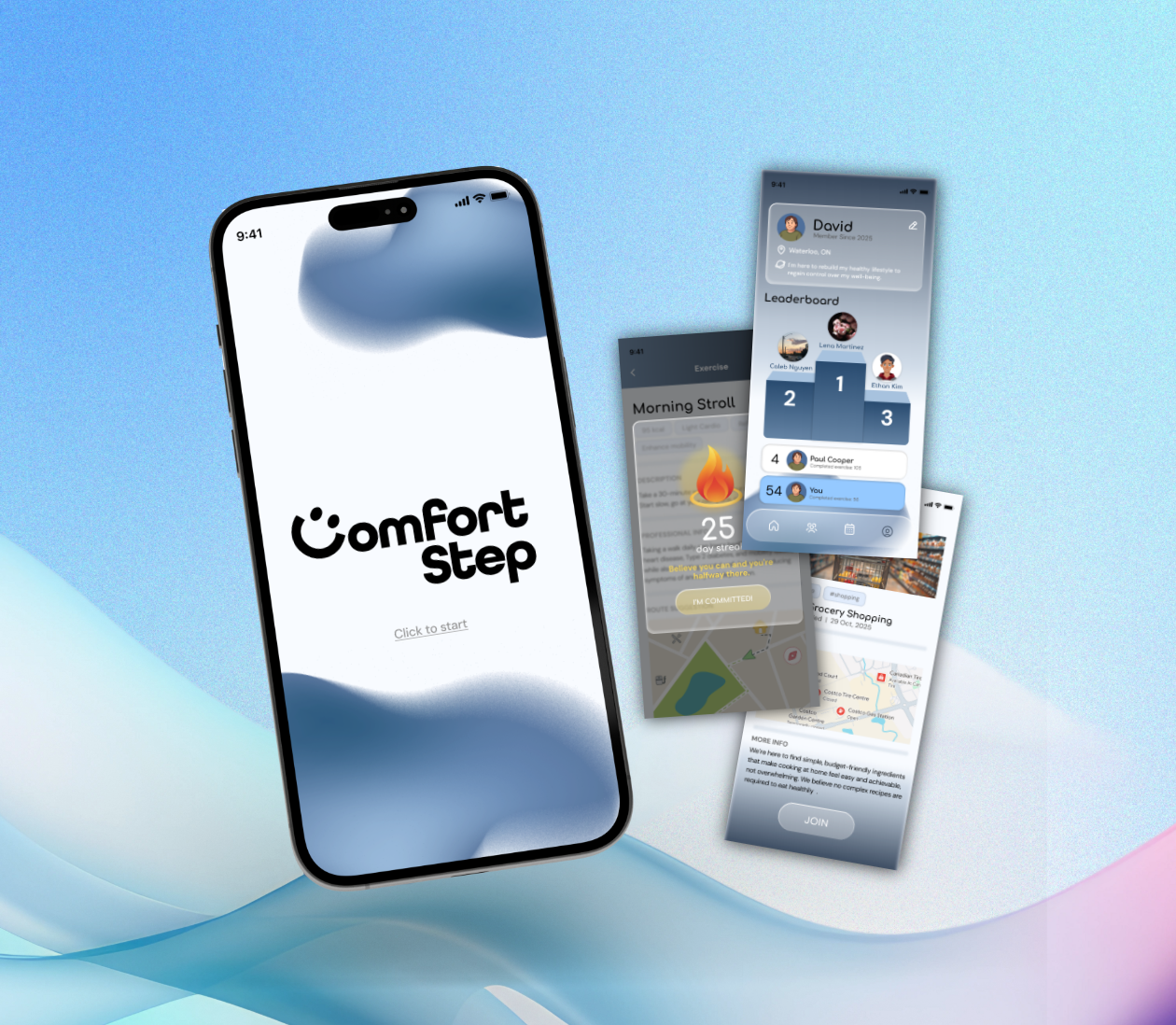
A health and wellness app made to encourage and motivate, not judge | Group members: Joy Chen, Shelisa Zhang, Enya Lau, Janelle Lai
Overview
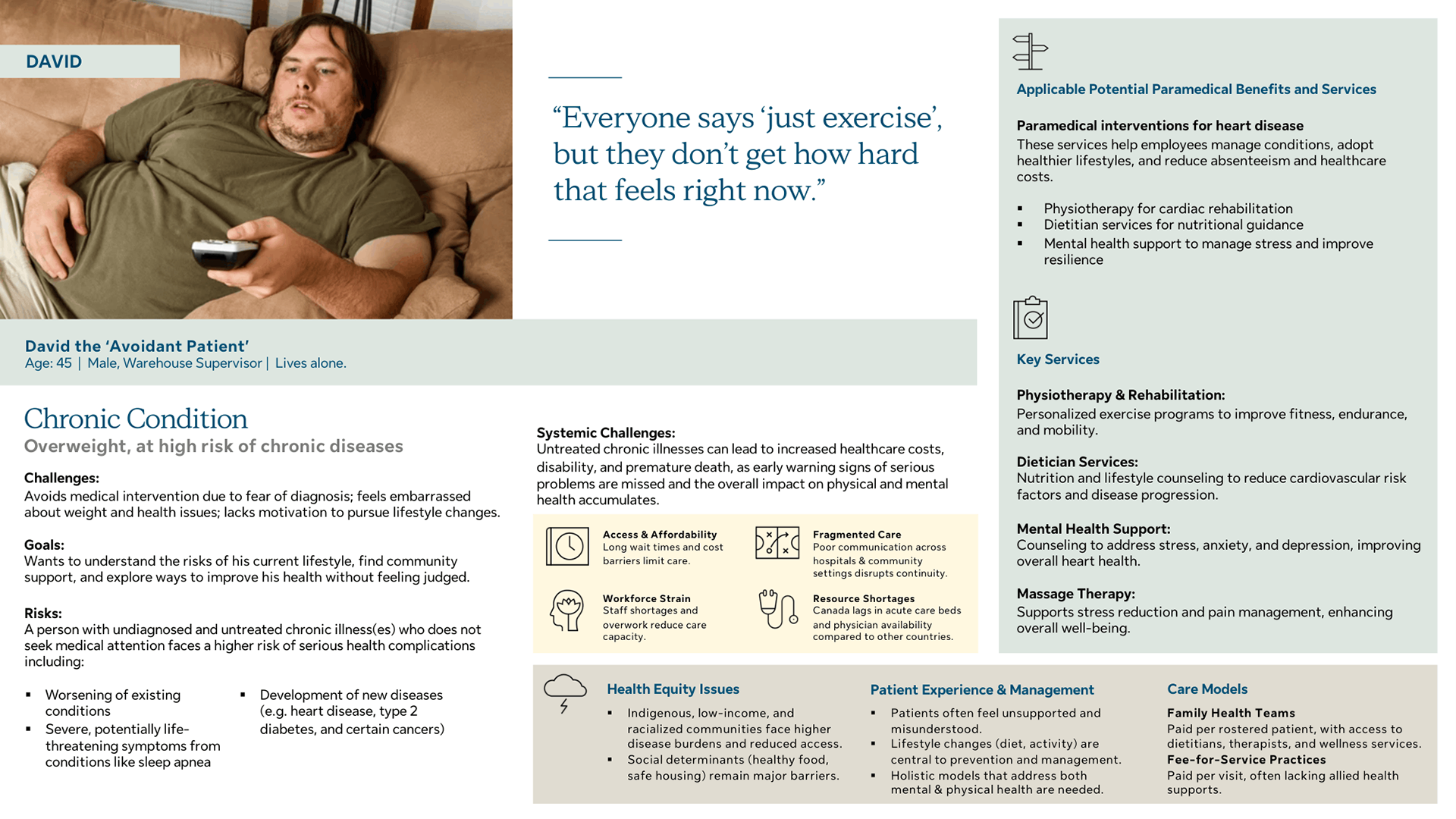
ComfortStep is a wellness app designed for people living with obesity who are navigating lifestyle change while managing stigma, low motivation, and fear of medical judgment. Our target user, David, doesn't need another calorie counter; he needs a system that supports him holistically, connects him to the community, and makes progress feel achievable. ComfortStep brings together habit tracking, personalized exercise, mental health support, and direct access to healthcare professionals in one non-judgmental space.
Research & Insights
We grounded the project in research on the intersection of obesity and mental health, mapping the systemic gaps users like David fall into: inconsistent care, social isolation, and apps that prioritize aesthetics over accessibility. User needs research helped us identify that motivation wasn't just about features; it was about how those features made people feel. Stigma-related pain points shaped every design decision, from the language used in the UI to how progress was framed and celebrated.
Ideation & Design
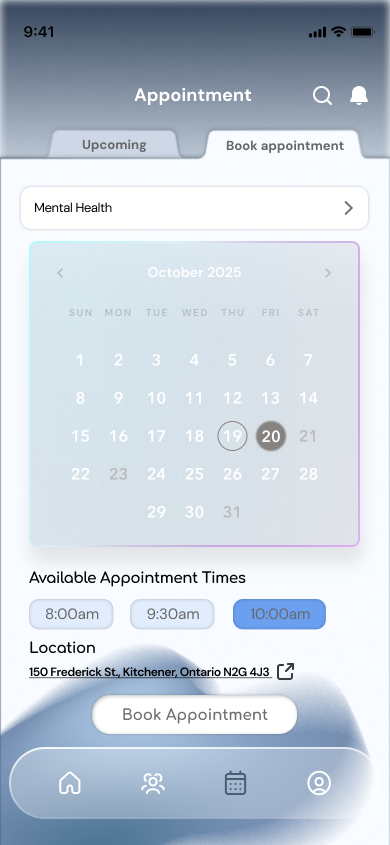
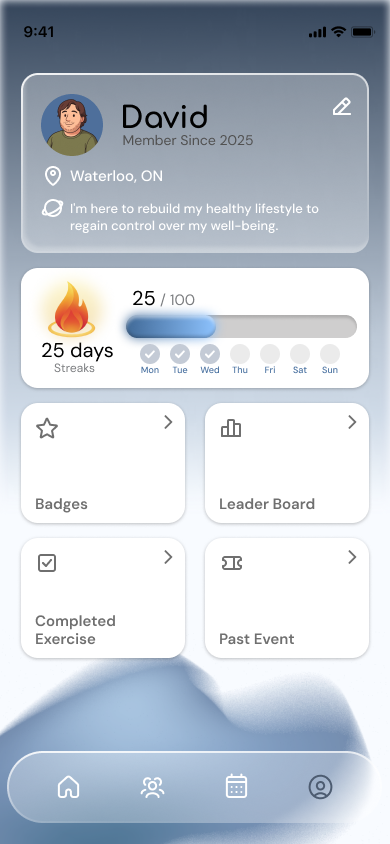
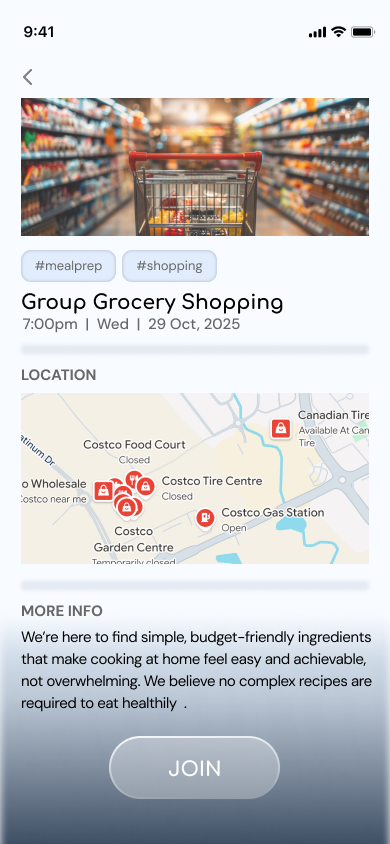
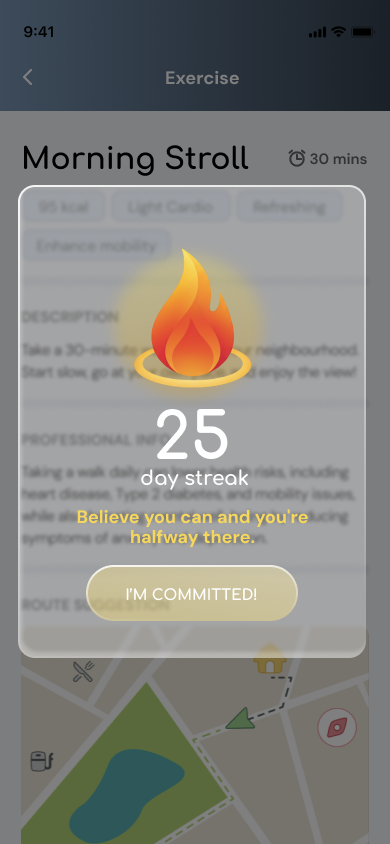
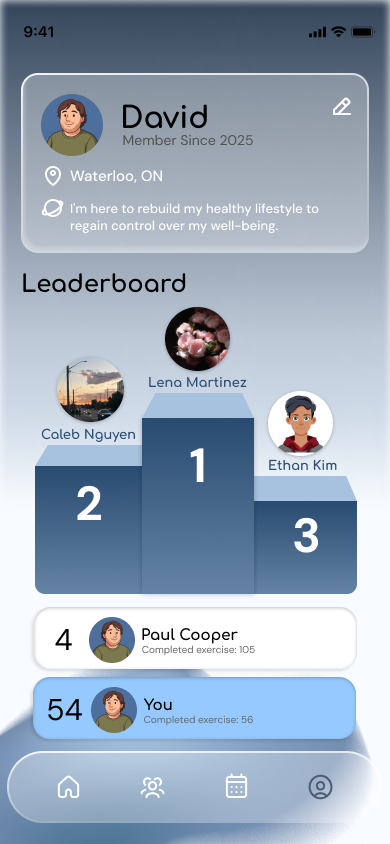
Early ideation focused on which features would meaningfully address our research findings. We landed on a combination of streaks and leaderboards for motivation, community events for social connection, personalized exercise for accessibility, and appointment booking for professional care. Prototypes were tested and refined with a focus on usability, emotional tone, and reducing any UI patterns that felt punishing or clinical.

Final Product
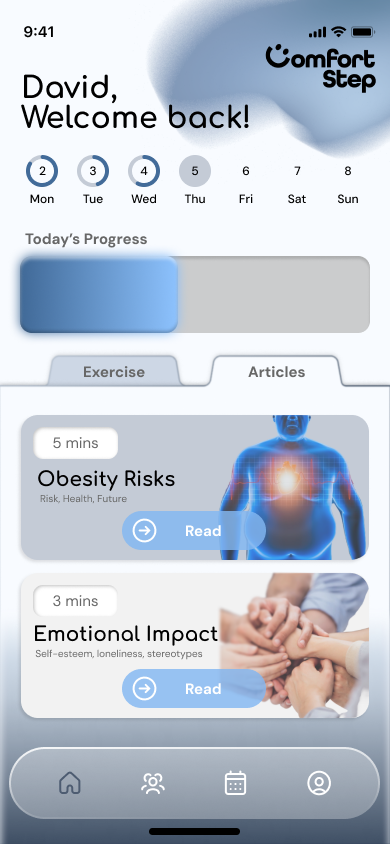
ComfortStep tracks daily habits and exercise, surfaces health content tailored to the user, and integrates with phone health apps to reduce friction. Social features like community events and leaderboards encourage connection without competition. Users can book appointments with healthcare professionals directly in the app, and achievements are framed as milestones rather than metrics, keeping the experience motivating rather than discouraging.
Reflection
This project deepened my understanding of how design can either reinforce or disrupt stigma. My role spanned research, ideation, presentation, and prototype refinement, and the biggest challenge was balancing empathy with functionality. I learned that designing for real-world constraints means accepting that the most important features aren't always the most technically interesting ones.