UX Research | UX/UI Design | Web App Design | Gamification | Behavioural Design | Interaction Design | Figma | Group Project | Waterloo
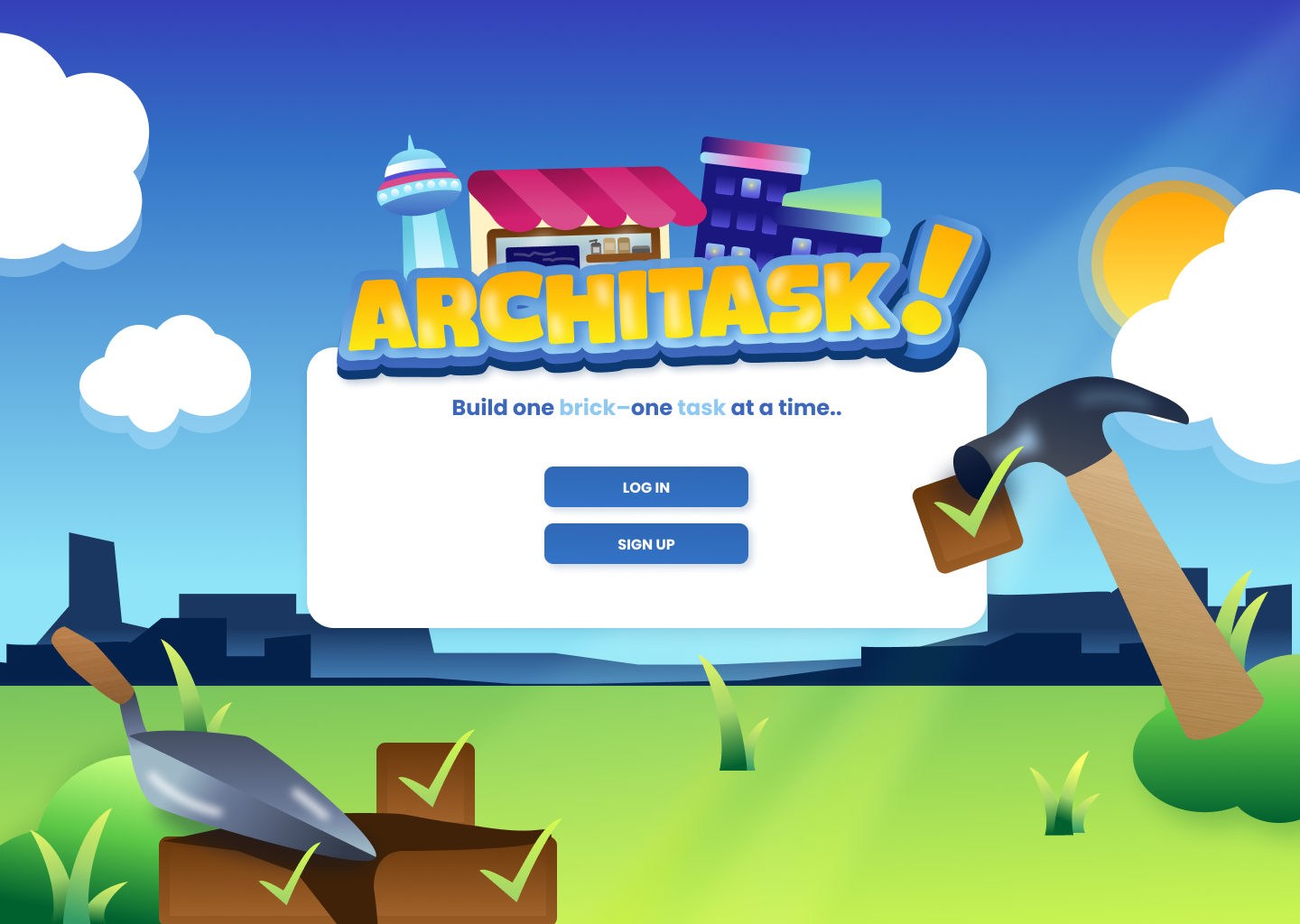
Productivity web application for gamers, with a fun UI and gaming aspects | Group Members: Michelle Ma, Alisa Tran, Joy Chen
Overview
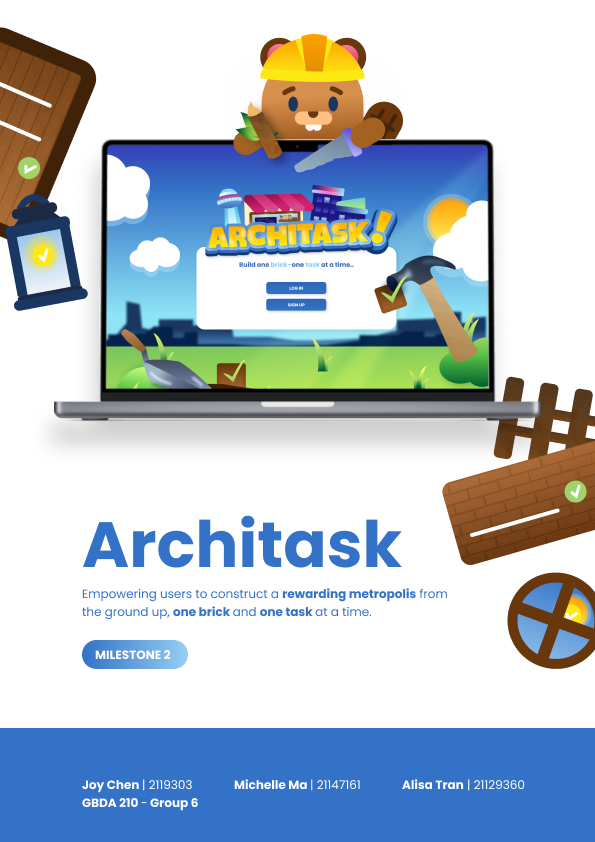
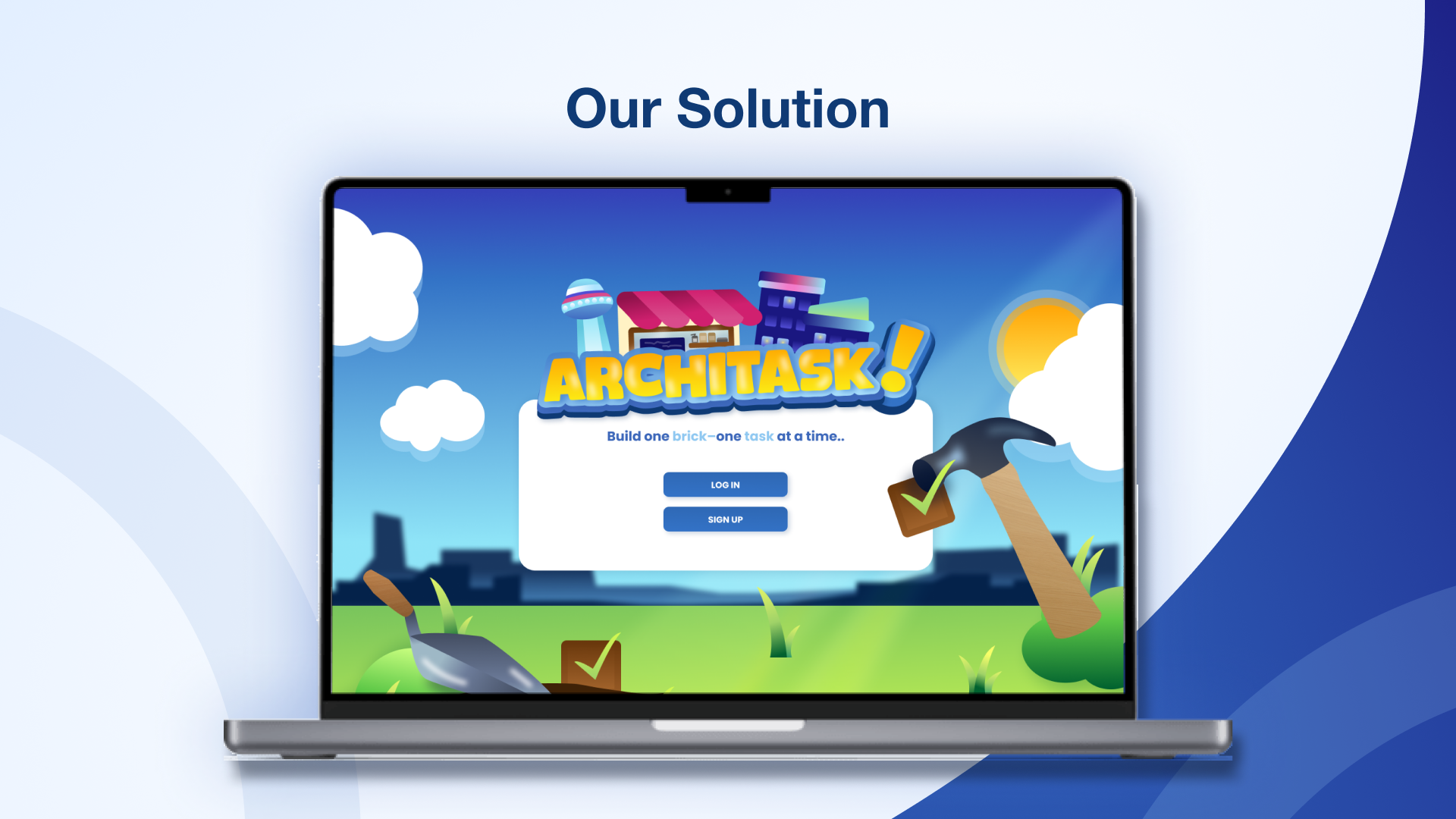
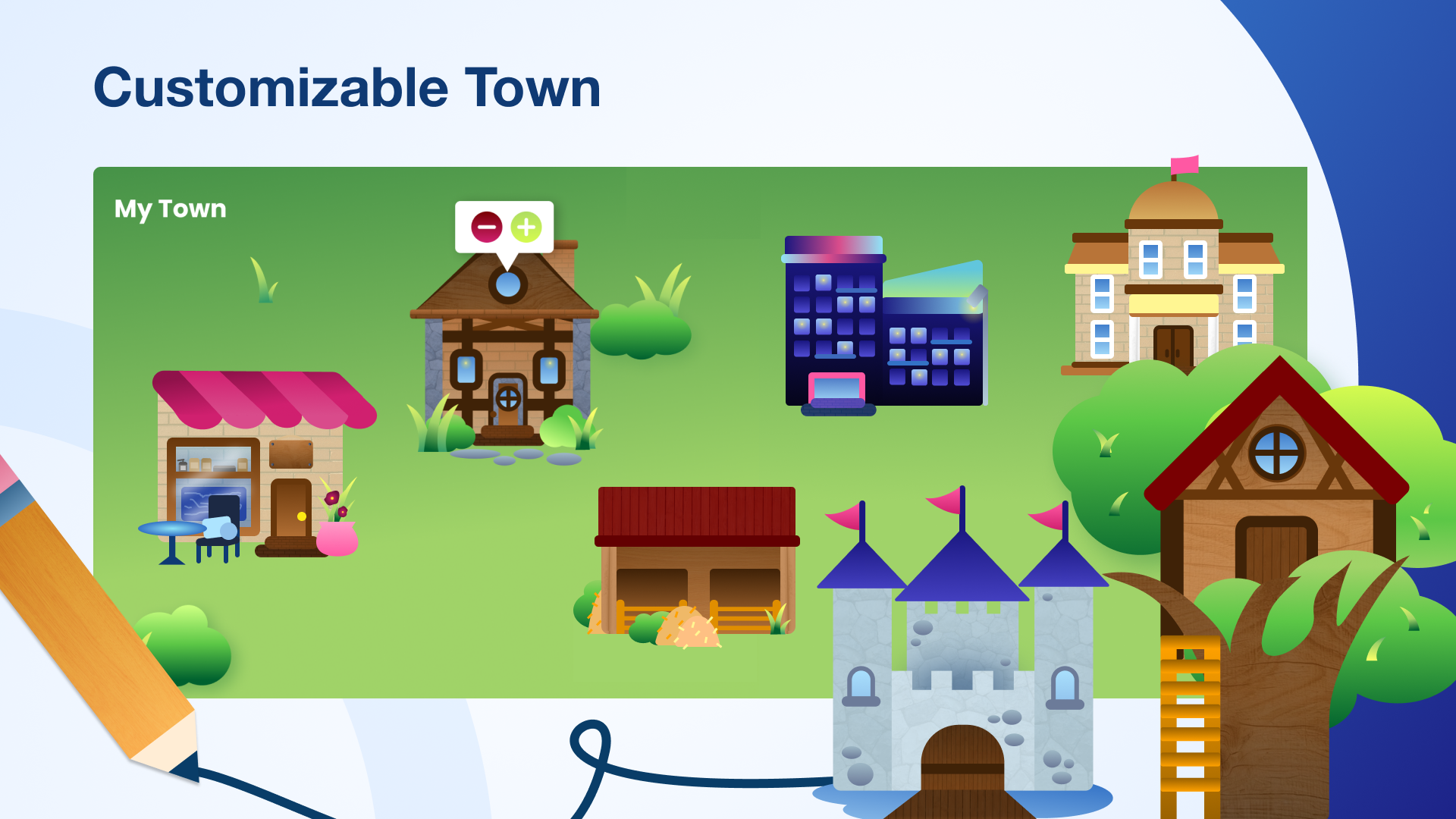
Architask is a productivity web app designed for student-gamers who struggle to stay on task when gaming is always one tab away. The concept turns task management into an interactive building experience by completing goals, which contributes to a visual structure that grows with your progress. By translating the reward loops that make games compelling into a productivity context, Architask makes focus feel less like discipline and more like play.
Research & Insights
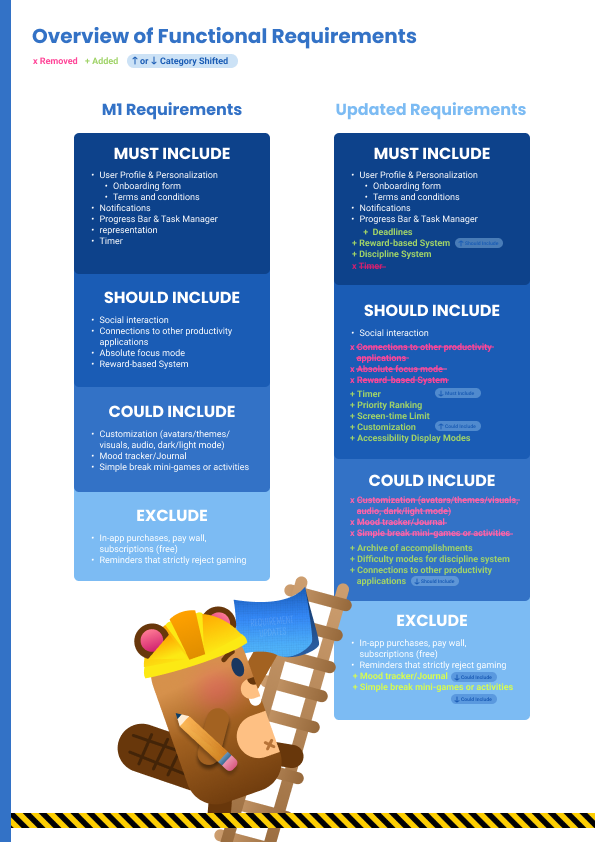
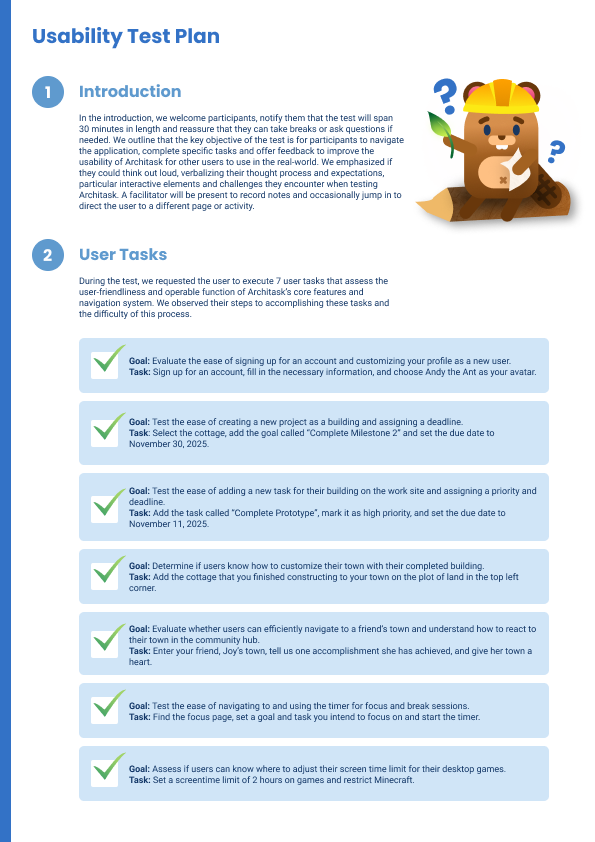
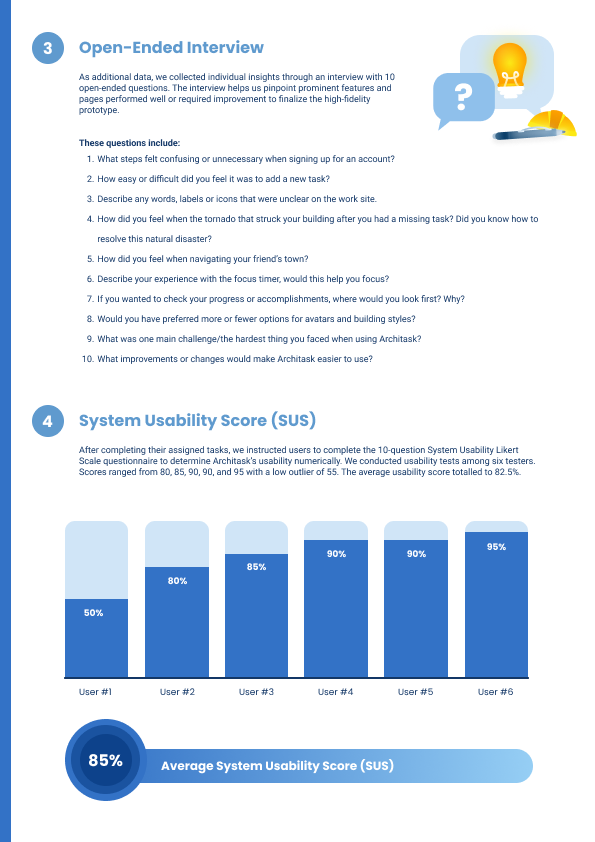
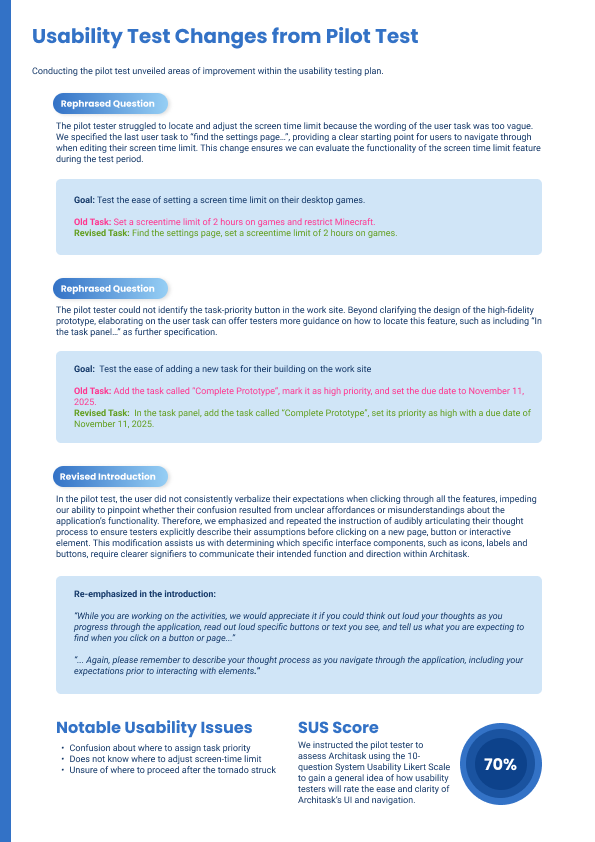
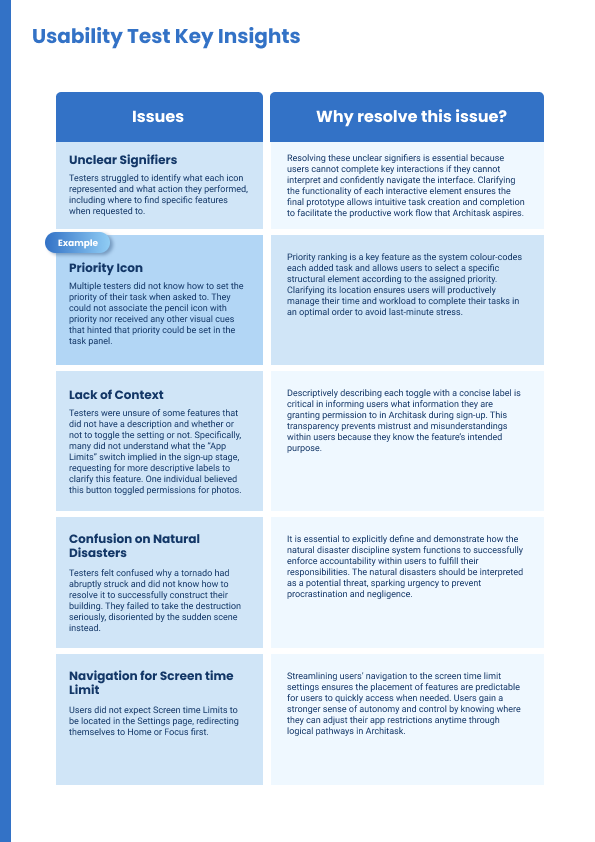
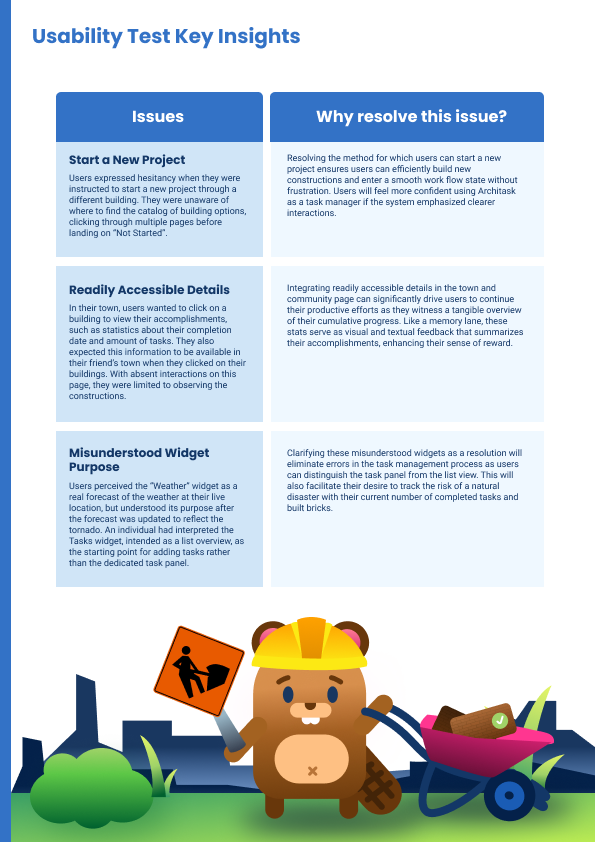
Through user interviews and research into gaming psychology, our team identified the core drivers behind why students game instead of work: reward systems, social interaction, and escapism. The research showed that gaming wasn't the enemy, but that existing productivity tools offered none of the same pull. We used these behavioural drivers directly as design requirements, mapping each feature back to a specific motivation we'd uncovered.


Ideation & Design
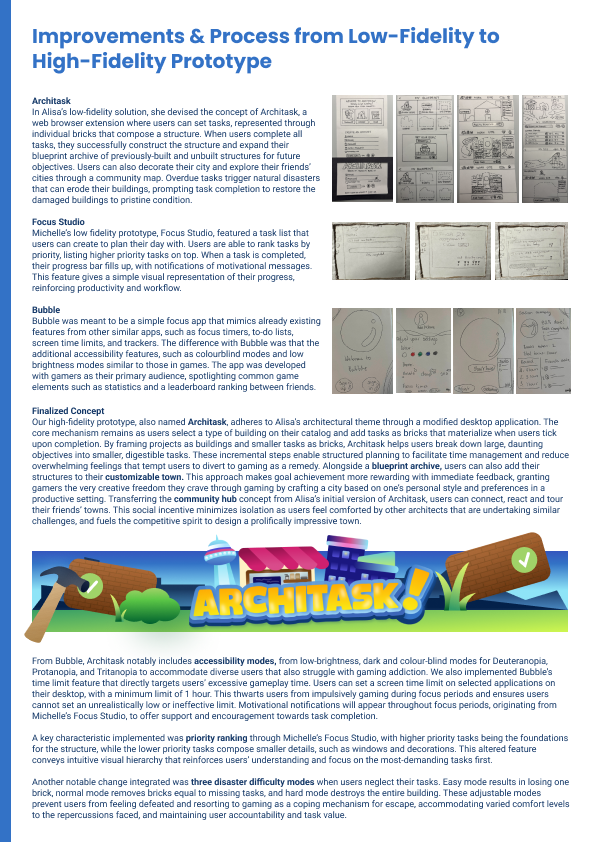
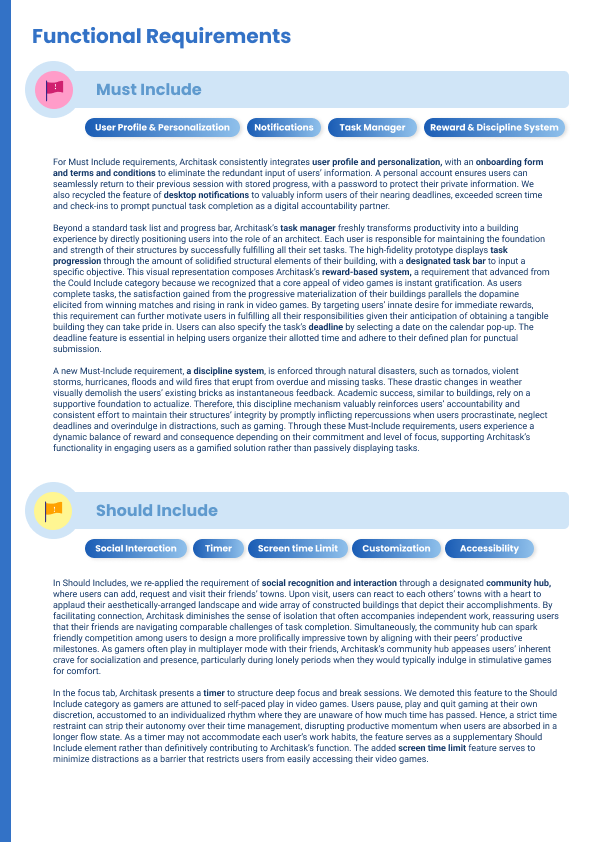
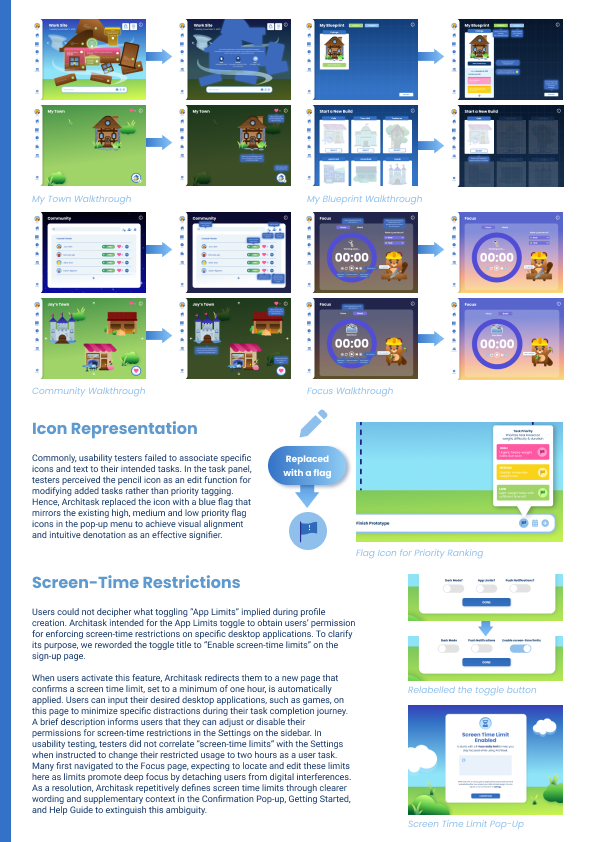
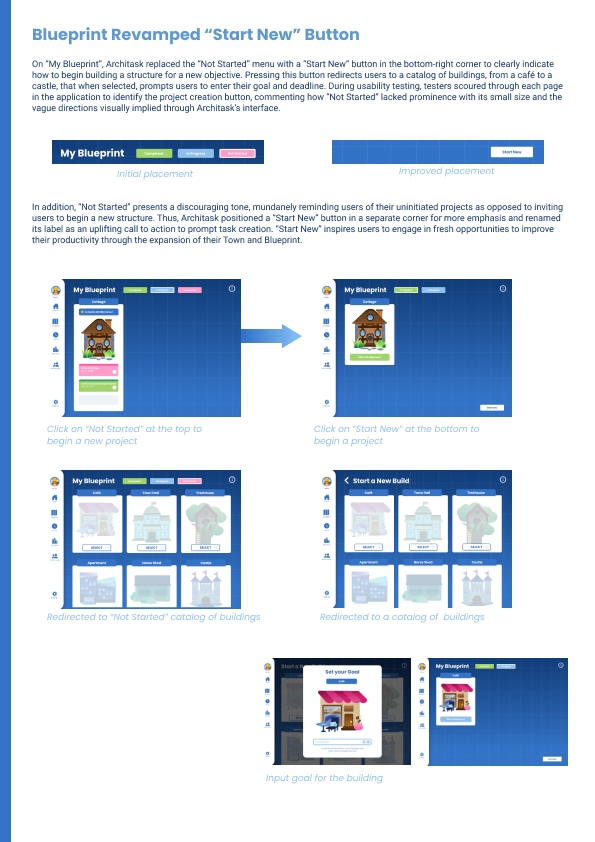
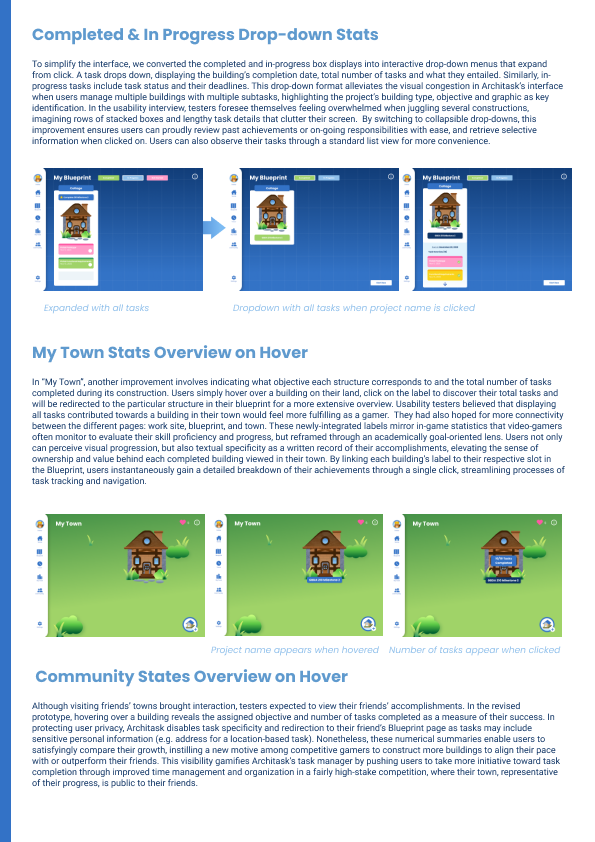
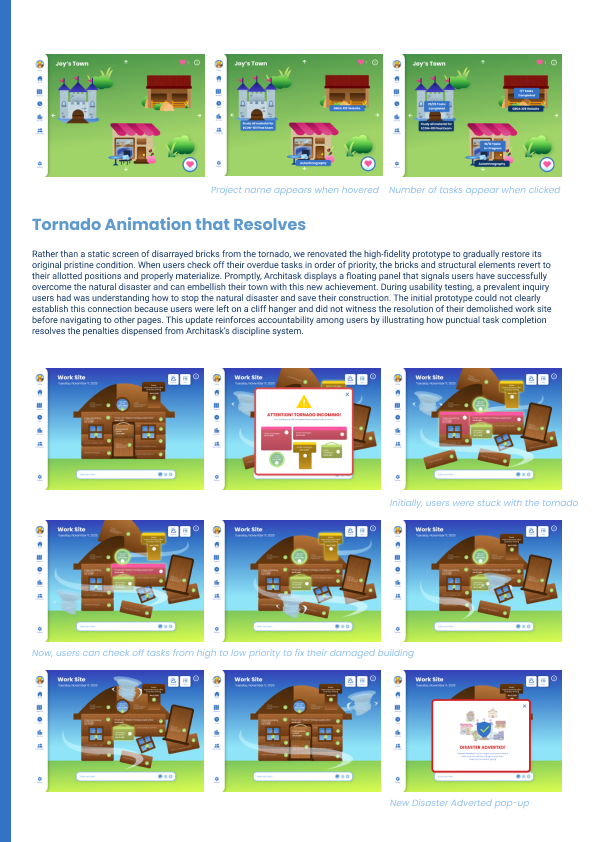
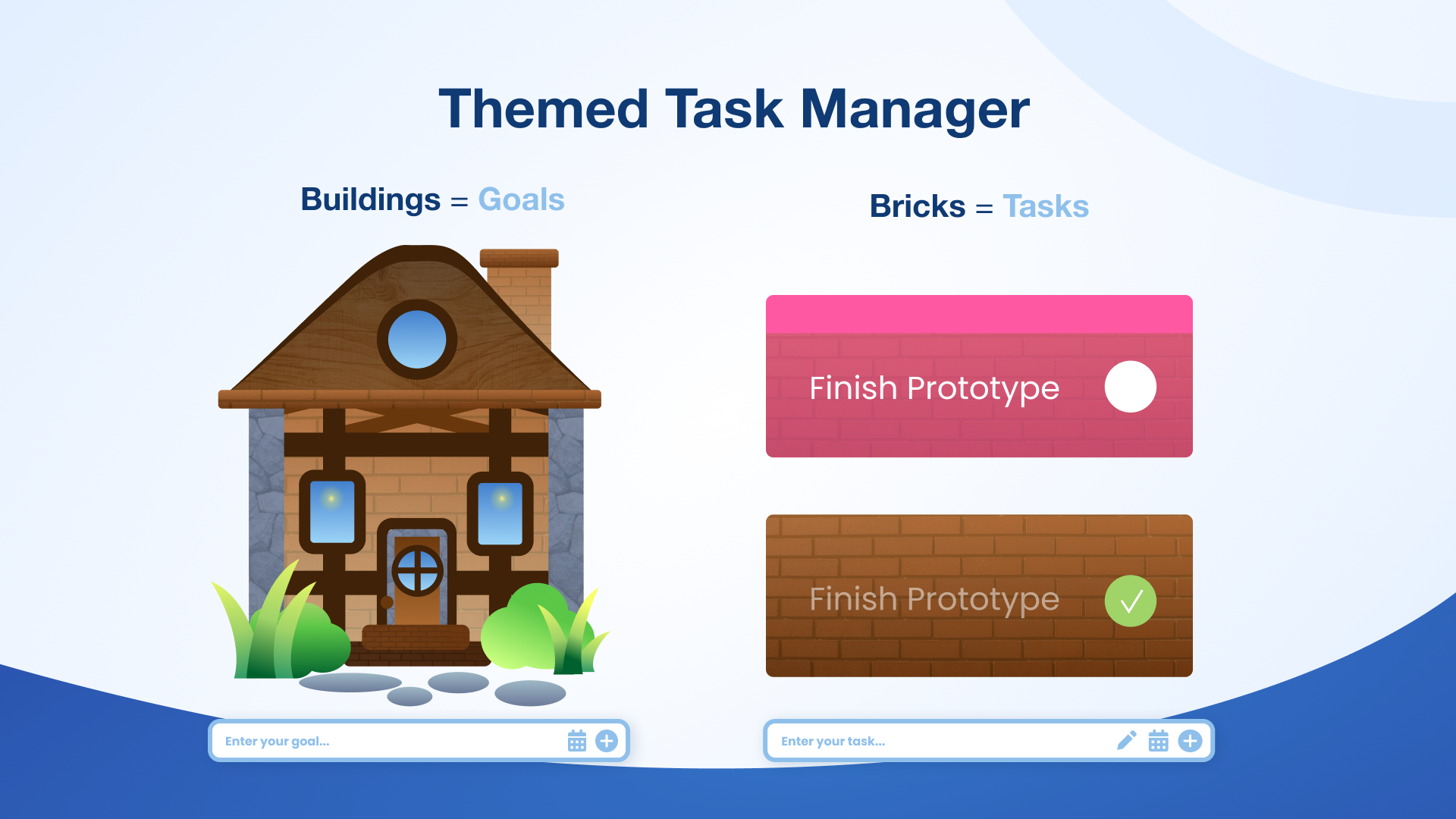
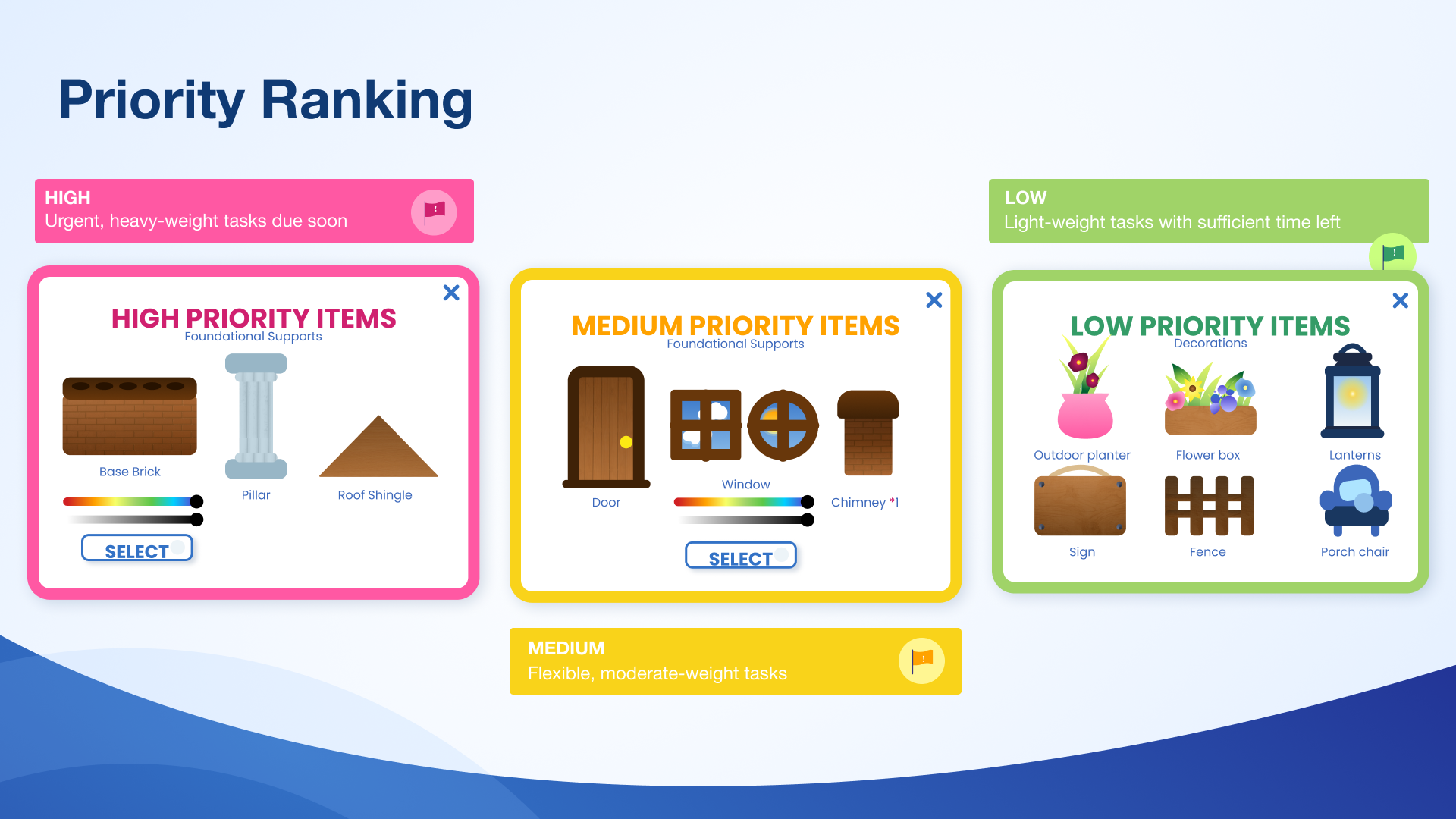
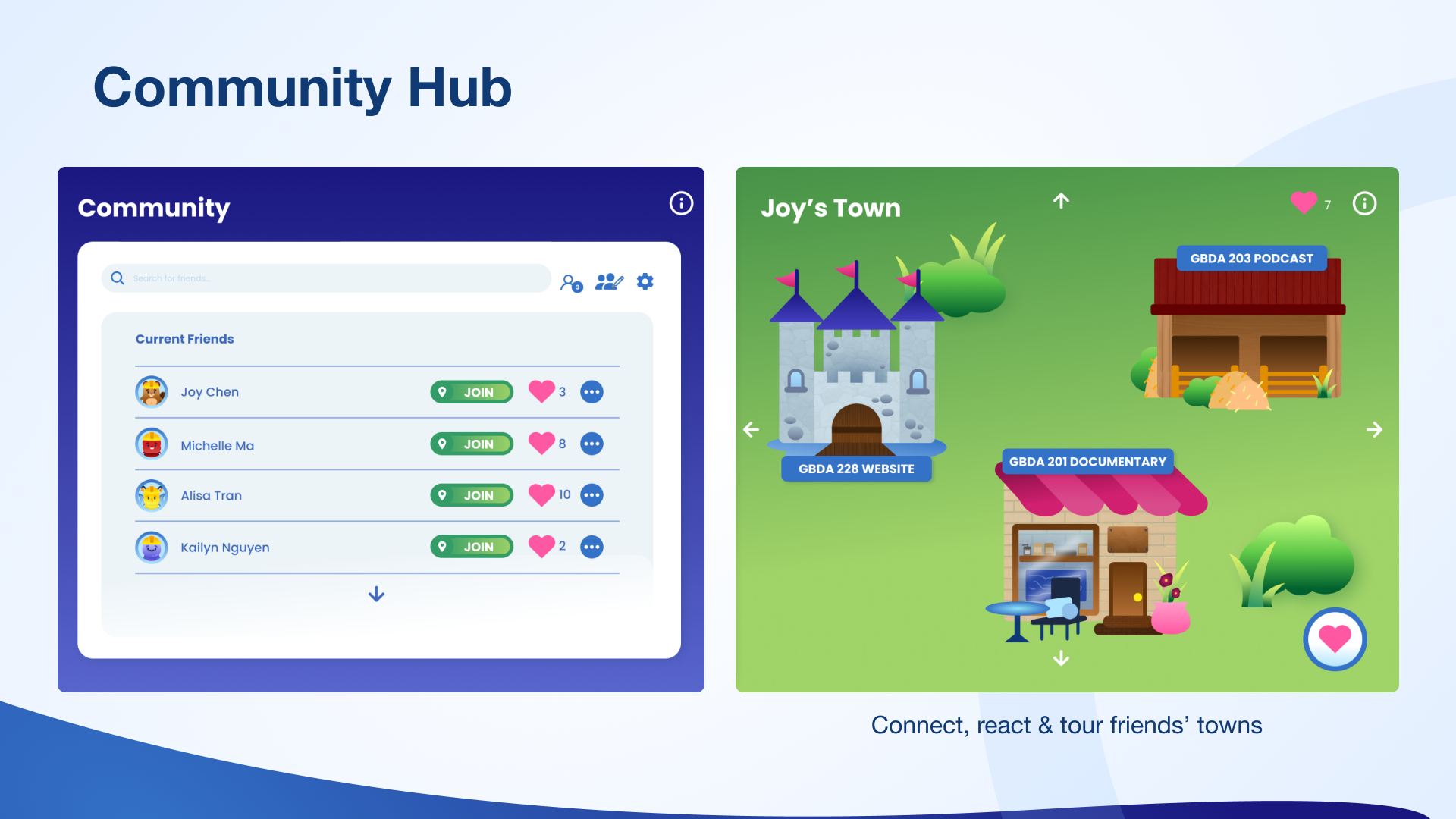
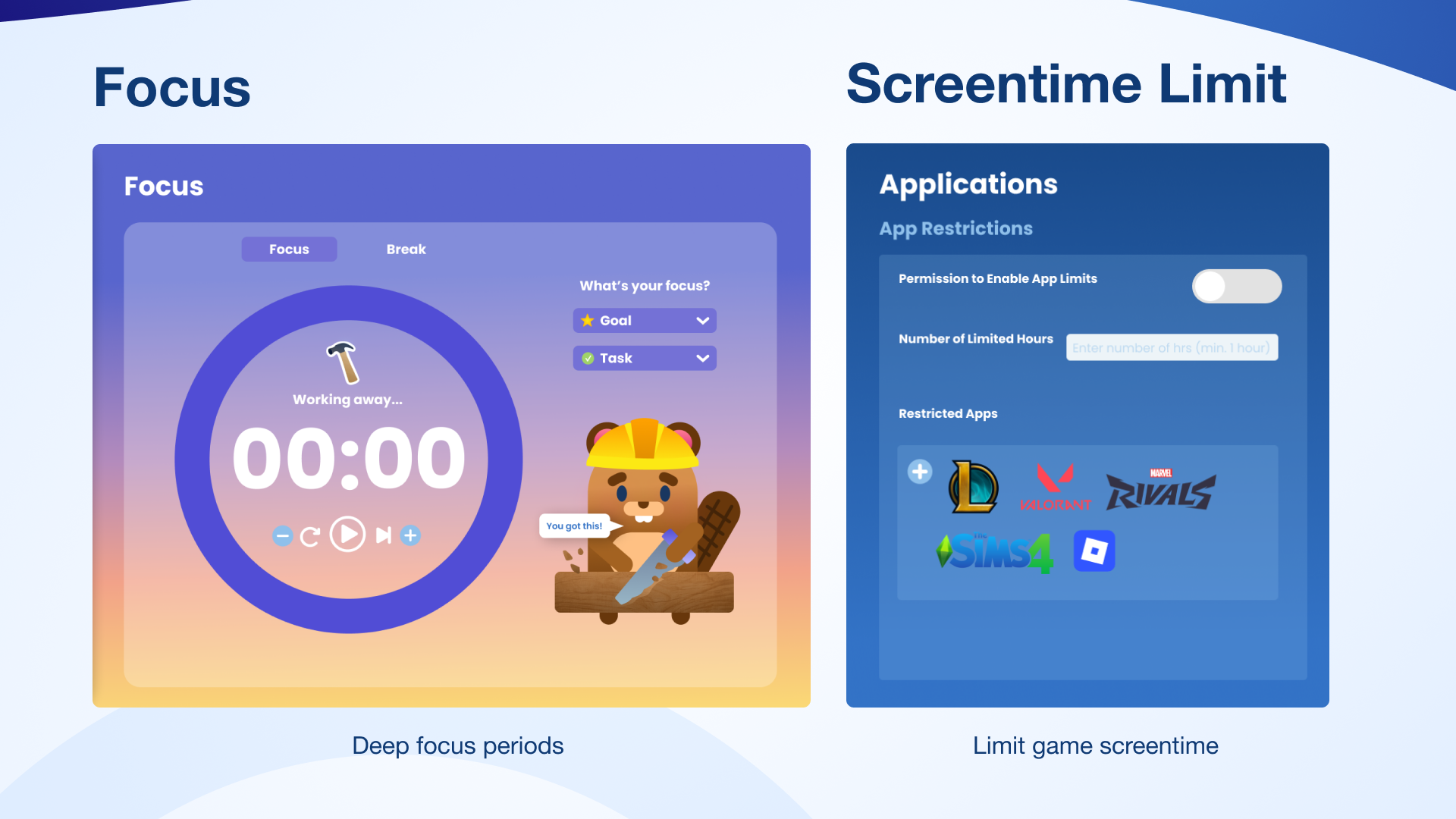
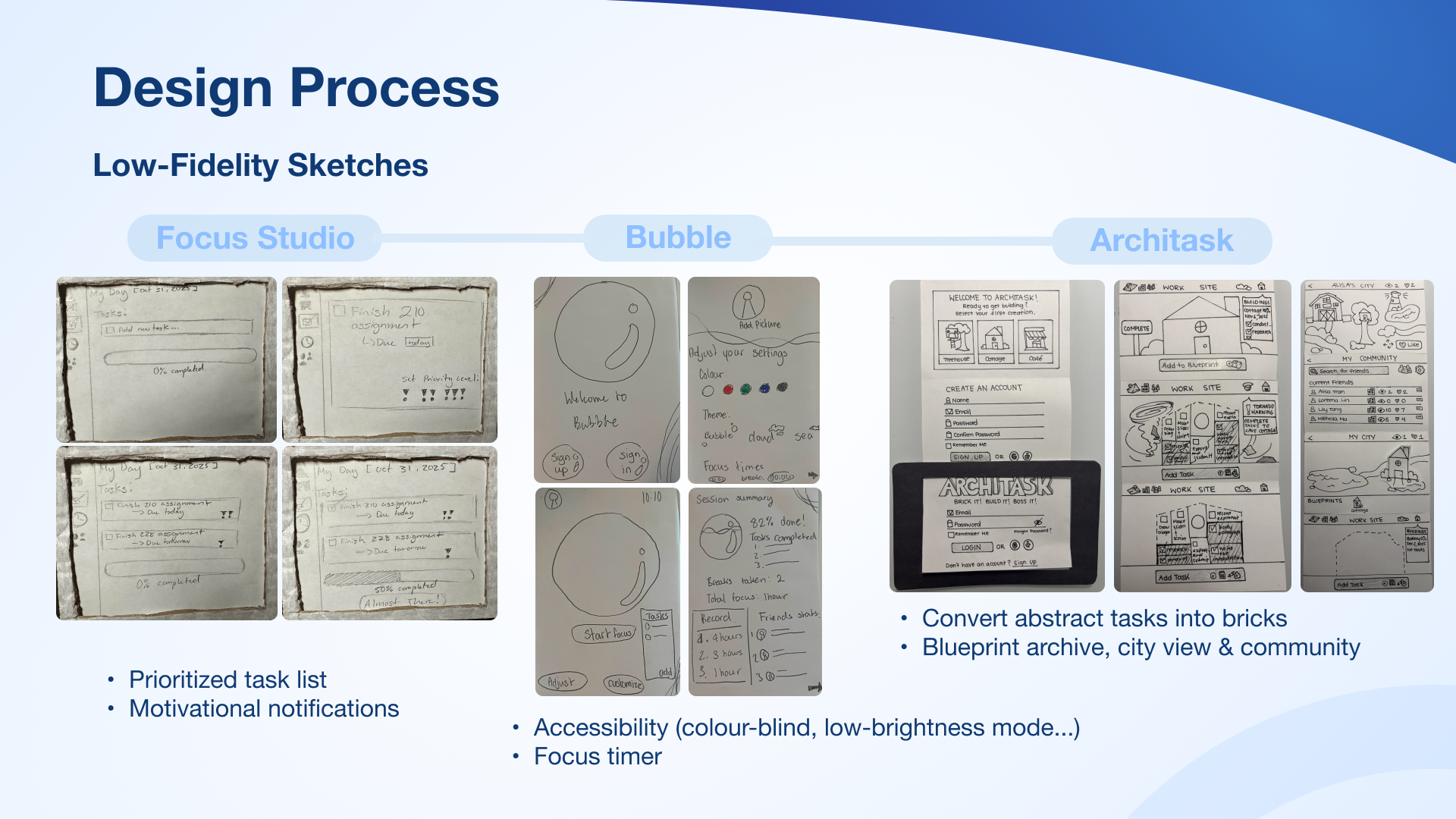
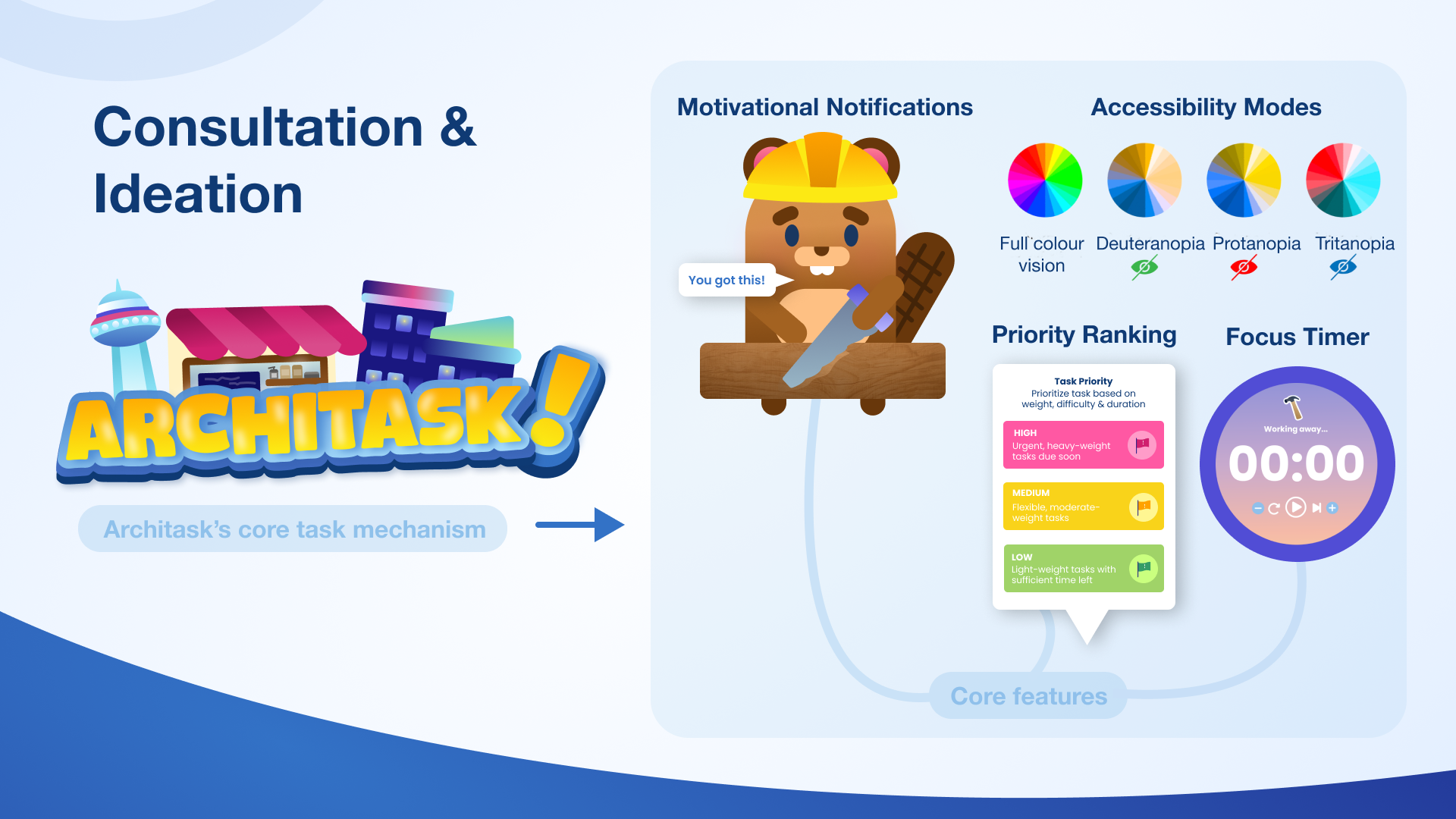
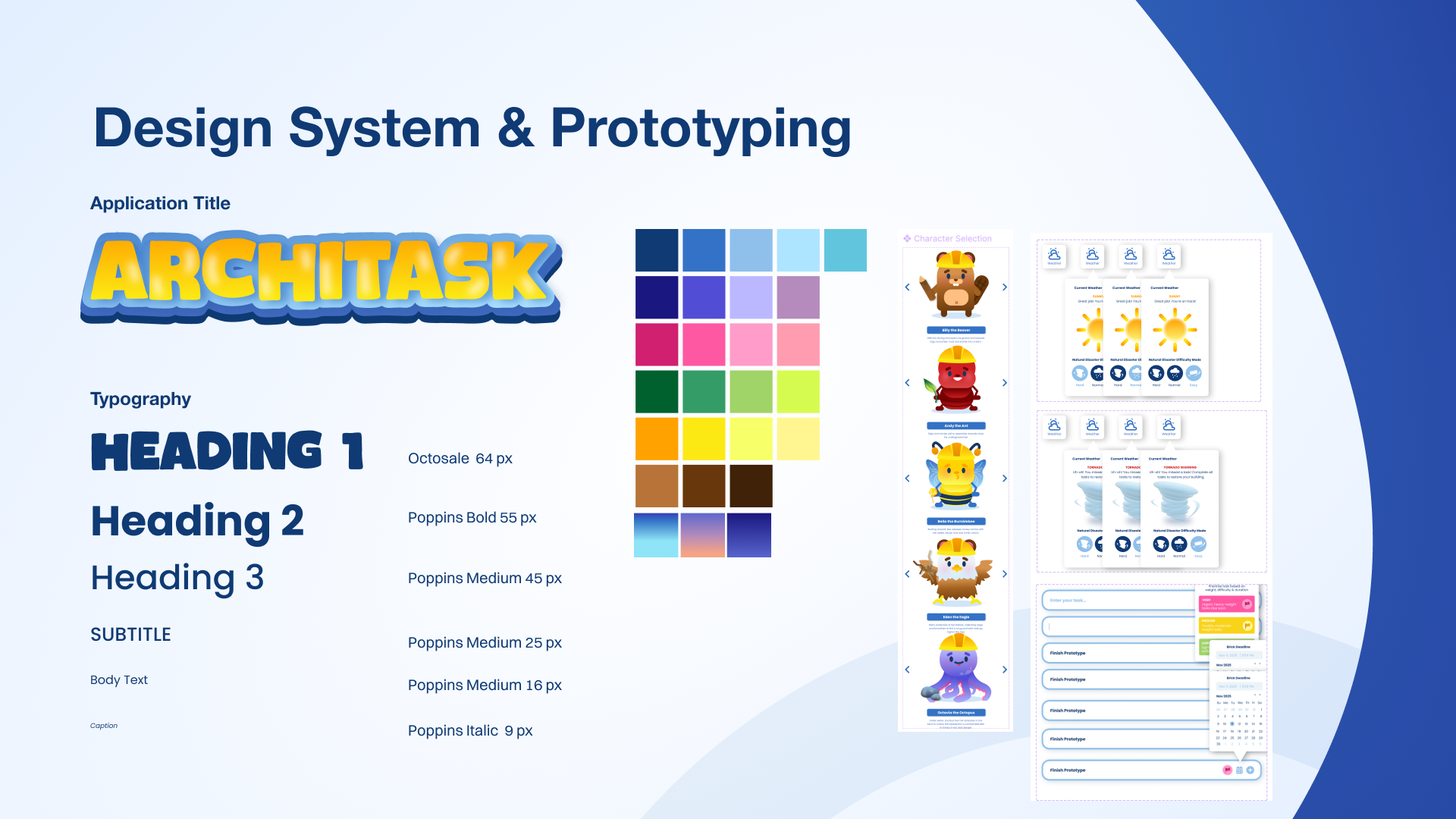
The design centres on a gamified building mechanic in which tasks correspond to building blocks — completing them adds to a visual structure that the user can see grow over time. We incorporated a focus timer, task prioritization, and social features so users could see friends' progress. The visual language was kept clean and game-adjacent without being childish, targeting students who wanted something that felt native to their world.
Final Product
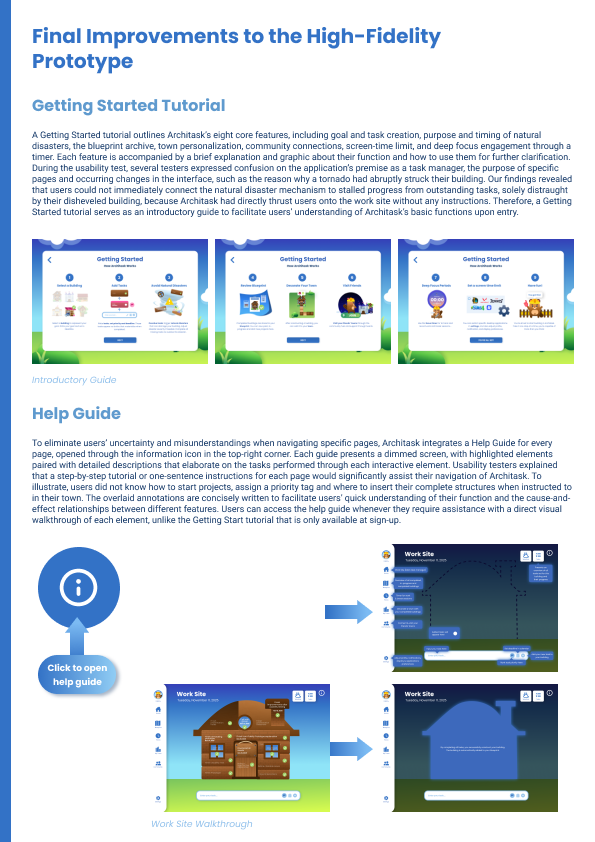
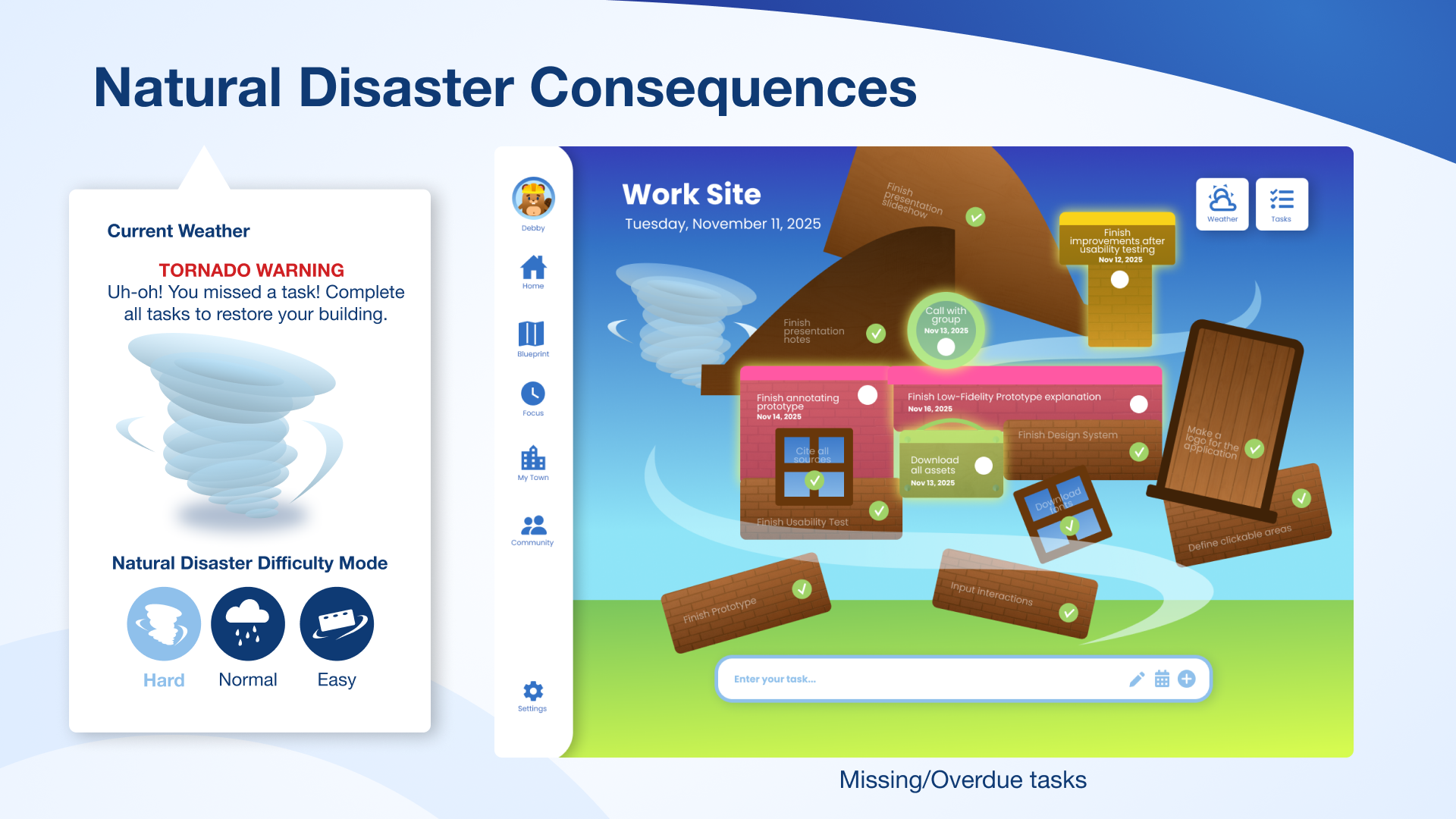
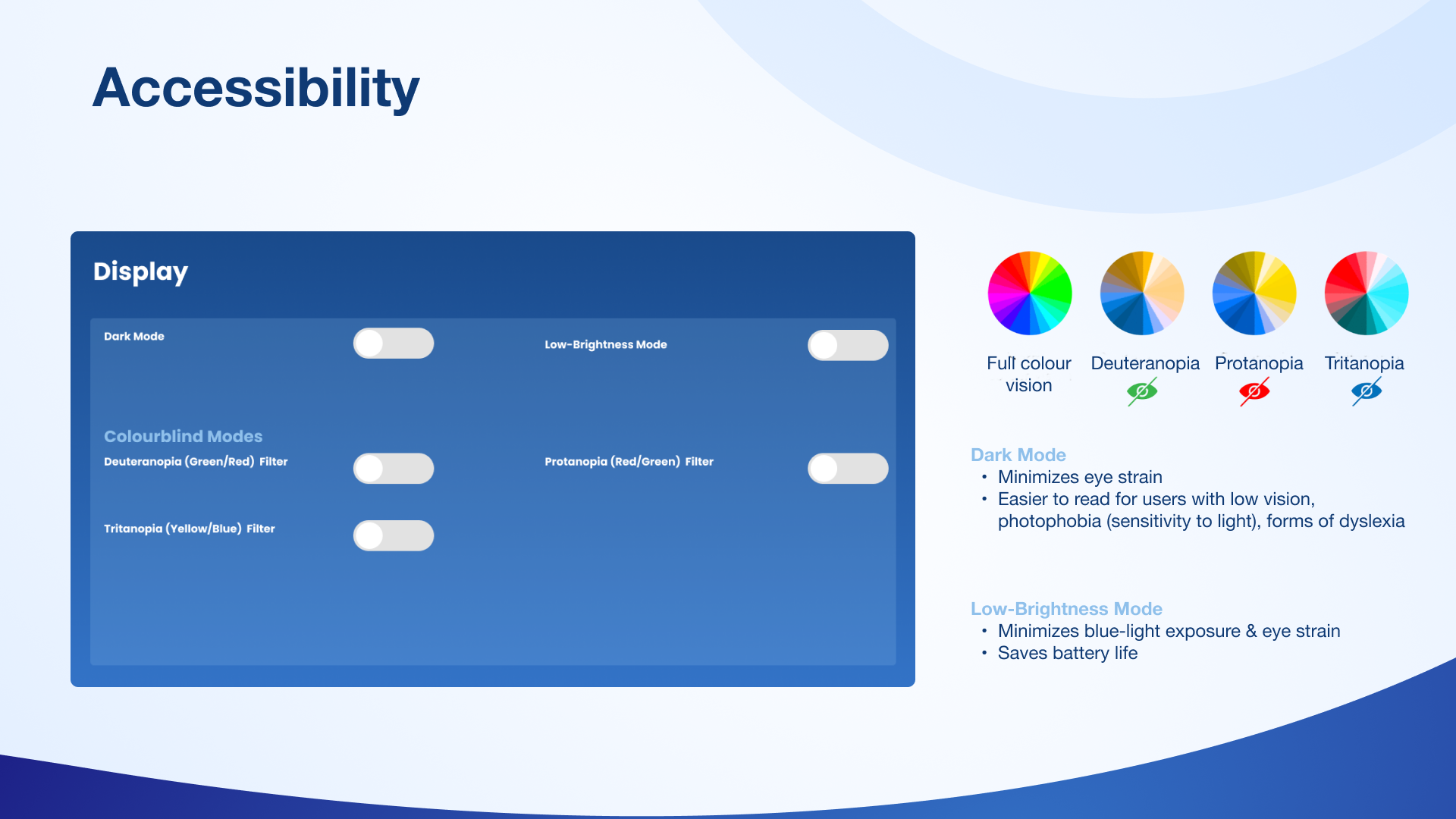
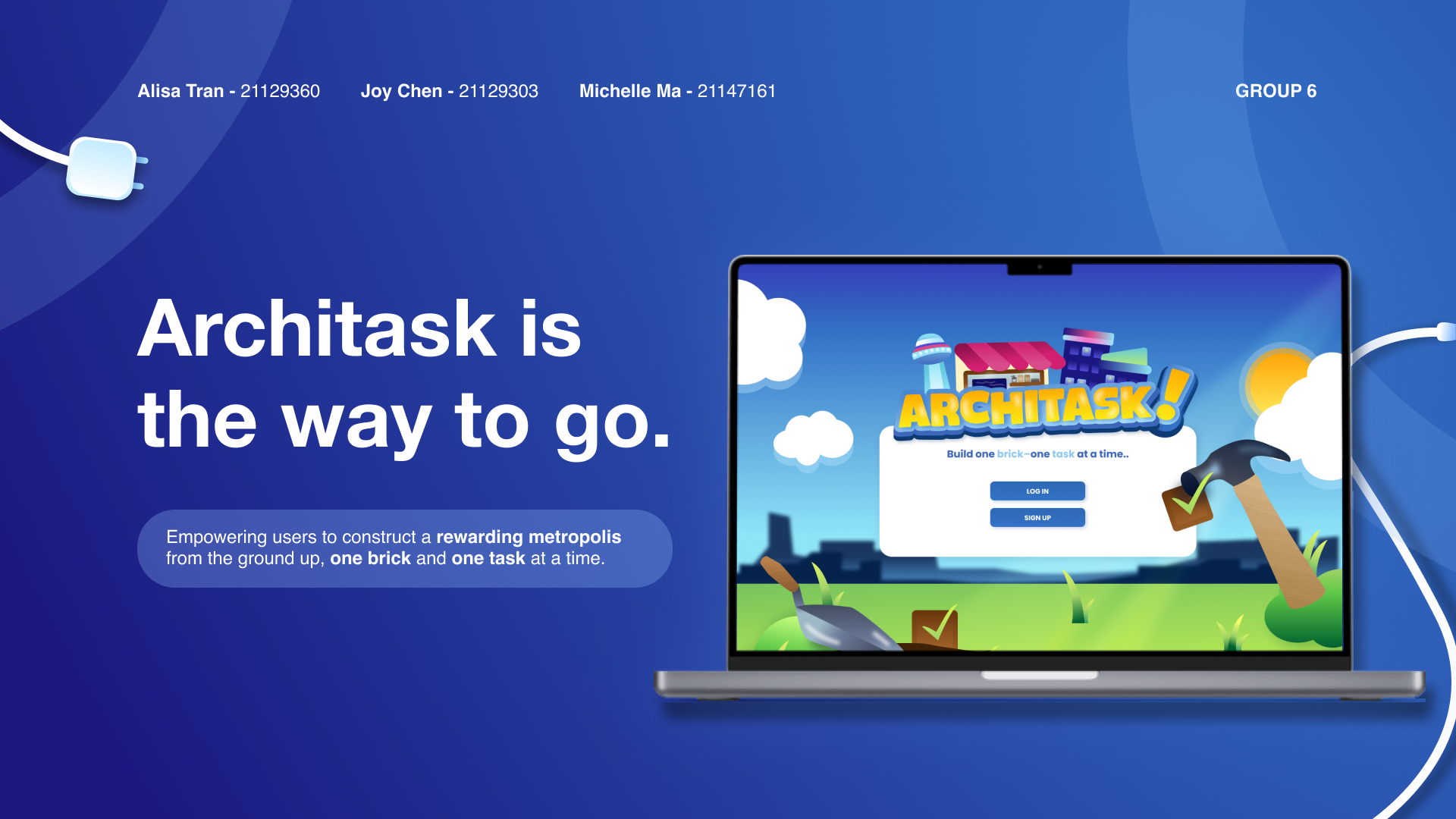
Architask combines task management, a focus timer, and a gamified building system into one web app. Users set goals, break them into tasks, and watch a structure take shape as they complete them. Social features add a layer of accountability, and the interface keeps distractions minimal while still feeling engaging.
Reflection
This project sharpened my ability to translate qualitative research into concrete design decisions. Working in a team pushed me to communicate design rationale clearly and advocate for user needs during critiques. The biggest takeaway was learning how to borrow engagement mechanics from one context and apply them meaningfully in another without losing sight of the actual problem being solved.